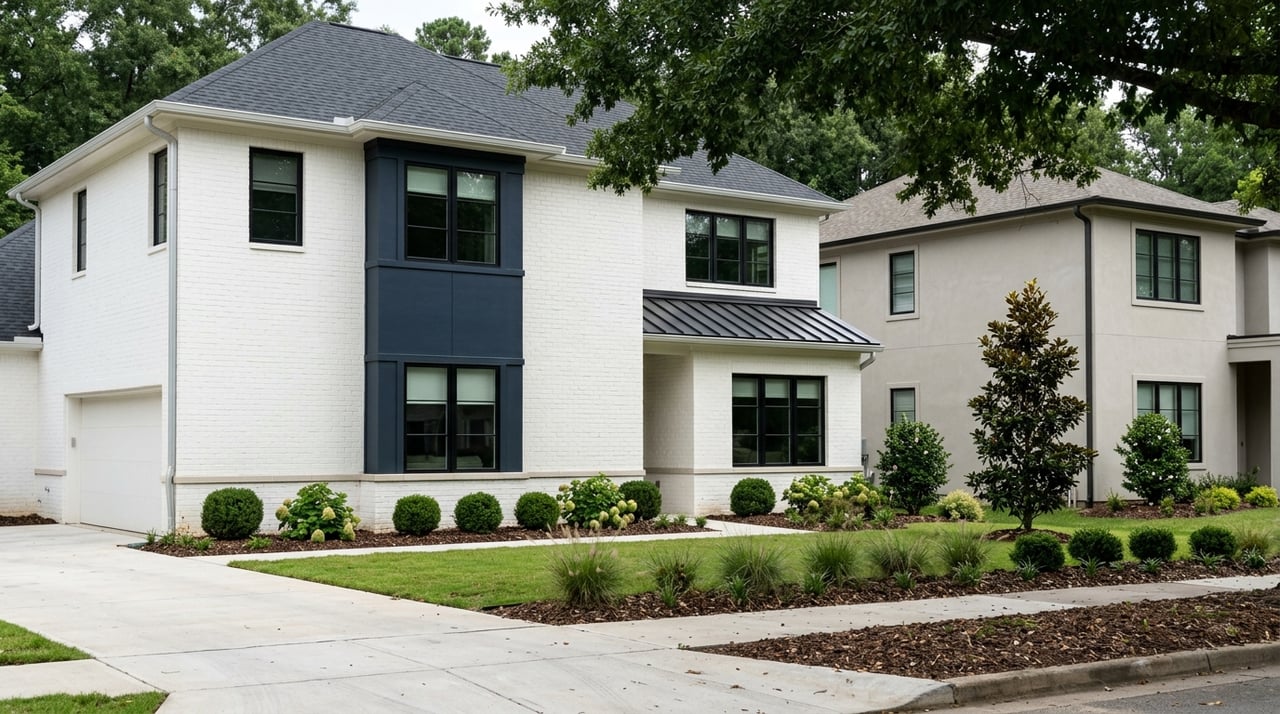
Buying new construction in Alpharetta can feel exciting and a little deceptive at the same time. The model home looks polished, the sales center feels easy, and the upgrade sheet can make everything sound simple. But if you want to choose the right community, you need to look past the finishes and evaluate the full picture. In this guide, you’ll learn how to compare Alpharetta new construction communities with a practical, long-term mindset. Let’s dive in.
Start With Alpharetta’s Planning Context
Before you focus on a floor plan, take a close look at what is happening around the community. In Alpharetta, Planning & Zoning handles zoning, land development, stormwater, trees, impact fees, design review, and public hearings. That matters because what gets built near your neighborhood can affect traffic, privacy, views, and resale over time.
This is especially important in areas influenced by larger planning efforts, including North Point and downtown. Alpharetta’s North Point Livable Centers Initiative covers one of the city’s major activity centers, and the Downtown Overlay is intended to encourage redevelopment. A community that feels quiet today could be influenced by nearby change later.
Questions to Ask About Future Development
When you visit a new construction community, ask direct questions about nearby land and future phases. You want to understand not only the homes being built now, but also what could change after you move in.
Consider asking:
- Are there future phases planned within the community?
- Is nearby land zoned for residential, retail, office, or mixed-use development?
- Have there been recent zoning changes or pending applications nearby?
- Could future roads, commercial space, or higher-density housing affect traffic or privacy?
Verify Details Instead of Assuming
Builder marketing materials can be helpful, but they should not be your final source for important details. If a specific feature matters to your decision, confirm it through the proper local source before you move forward.
For example, if school attendance is part of your search, verify the exact property address using Fulton County Schools’ attendance-zone map. Fulton County Schools also posts current and prior redistricting information, which is a useful reminder that attendance boundaries can change.
Think Beyond the Base Price
A new home’s sticker price is only part of the story. Georgia consumer guidance notes that the true monthly cost of ownership can also include homeowner’s insurance, title insurance, property taxes, utilities, appliances, HOA fees, repairs, maintenance, yard care, and pest control.
That is one reason two communities with similar base prices can feel very different once you add everything up. A smart comparison looks at the monthly payment, the recurring costs, and the likely upkeep over time.
Evaluate the Builder Carefully
The builder matters just as much as the community. In Georgia, you can verify contractor licensing through the Secretary of State’s verification system, and the Georgia Attorney General advises buyers to check licenses, insurance, references, written estimates, and a fully written contract.
You should also make sure the contract includes warranties, promised features, and written start and completion dates where applicable. If something matters to you, it should be documented. Verbal assurances are not enough.
What to Review Before You Sign
A strong builder review should include more than a quick online search. Georgia consumer guidance recommends checking references and reputation through referrals and recognized organizations, while also reviewing the actual paperwork that will govern the build.
Use this checklist:
- Verify the builder’s Georgia license status
- Ask for proof of insurance
- Request references from recent buyers
- Review the written contract in full
- Confirm start and completion timing in writing
- Make sure all promised features and upgrades are listed in writing
Understand the Warranty
Georgia rules require a licensed residential contractor to offer a written warranty for covered contracts involving single-family residences. That warranty should spell out covered work, exclusions, standards, length of coverage, claim procedures, contractor response options, and assignable manufacturer warranties.
You should ask to see the warranty before signing the contract. In many new homes, workmanship and materials coverage for many components is often one year, major systems such as HVAC, plumbing, and electrical are often two years, and some builders offer longer coverage for major structural defects.
Know the Repair Process
Georgia’s Right to Repair Act is also important in new construction. The state says buyers must receive notice of the Act’s procedures in sales contracts, and the Consumer Protection Division advises homeowners to review the warranty, keep records, and follow the repair-notice process before suing a builder.
In practical terms, that means organization matters. Save emails, photos, change orders, warranty documents, and notes from walkthroughs so you have a clear record if an issue comes up.
Look Closely at the Lot and Site Work
Many buyers spend most of their attention on the house itself, but the lot can shape your day-to-day experience just as much. In Alpharetta, this matters even more because the city has specific planning focus areas tied to stormwater, streams, and trees.
A beautiful home on a poorly understood lot can create headaches later. You want to know how the property handles rain, what the finished grade will be, and whether the site comes with drainage or flood-related concerns.
Ask About Drainage and Flood Risk
Alpharetta’s Public Works Stormwater Program includes floodplain information, inspections, runoff, pollution, and water-quality resources. Buyers should confirm grading, drainage direction, finished-floor elevation, and whether the lot lies near any mapped flood risk.
Flood risk should be verified carefully because flood maps can change over time. Ask the builder how water moves across the lot during heavy rain and whether any drainage easements affect the yard.
Review Trees and Privacy
Tree preservation can also affect long-term value and enjoyment in Alpharetta. The city has a dedicated tree-removal area within Community Development and an established framework for tree care and removal.
If you are considering a wooded or partially wooded lot, ask which trees will remain after clearing. You should also ask whether mature tree removal could change backyard privacy, shade, or drainage after closing.
Review the HOA Beyond Amenities
A pool, clubhouse, or front-entry sign can make a community look appealing, but the HOA deserves a closer look. Georgia consumer guidance says HOA governing documents control when dues can be increased, and special assessments can happen if reserves are too low.
That means the real question is not just what the HOA offers today. It is whether the structure, budget, and rules fit your lifestyle and long-term costs.
Key HOA Questions to Ask
Some Alpharetta communities have more than one association structure, and the details can vary quite a bit. Before you buy, ask for the governing documents and review the budget and reserve information.
Focus on these questions:
- Is there a master HOA, a neighborhood HOA, or both?
- What amenities are actually covered by the dues?
- How can dues be increased?
- Are there reserve studies or reserve targets?
- Are any special assessments planned?
- How strict are the architectural review rules?
The Attorney General also notes that homeowners in certain Georgia associations may obtain comprehensive reports on finances, affairs, and budget projects at annual board meetings. That is another reminder that HOA health is not just about appearance. It is about structure and transparency.
Use the Model Home the Right Way
A model home is a sales tool, not a guarantee of what you will get. It is useful for comparing layouts, room flow, and finish levels, but it should not be treated as proof of what is included in the base price.
Georgia contractor guidance says materials should be clearly specified, verbal promises should be included in the written contract, and changes after construction begins can be costly. That makes your early review process especially important.
Compare Standard Features vs. Options
One of the smartest ways to shop new construction is to compare the included-spec sheet to the model home line by line. Buyers should ask what is standard versus optional for items such as cabinets, counters, flooring, appliances, lighting, faucets, trim, blinds, garage doors, irrigation, and backyard finish grade.
This step helps you avoid surprises and compare communities more accurately. A lower base price can lose its appeal quickly if many of the features you assumed were included are actually upgrades.
Prioritize Hard-to-Change Upgrades
If you decide to spend more, focus first on features that are difficult or expensive to change later. A practical approach is to put upgrade dollars toward lot placement, structural options, storage, electrical and plumbing rough-ins, insulation, and outdoor living features.
Those items usually affect long-term function more than cosmetic touches. Paint colors and light fixtures can be changed later. Framing decisions and site placement usually cannot.
Treat the Walkthrough Like Quality Control
Before closing, your final walkthrough should be handled like a serious inspection step. Georgia consumer guidance advises buyers to review the entire project before final payment, point out defects immediately, and avoid signing completion documents until the work matches the contract and code certification is in hand.
This is the moment to slow down and verify details. Check finishes, systems, fixtures, doors, windows, flooring, appliances, exterior grading, and any agreed-upon changes.
Keep a Full Paper Trail
Documentation is one of your best protections in a new construction purchase. Many warranty disputes are handled through formal claim channels, so it helps to have complete records from the beginning.
Keep copies of:
- The contract and all addenda
- The included-spec sheet
- Upgrade selections and change orders
- Warranty documents
- Emails and text summaries
- Photos from walkthroughs and punch-list items
A Simple Alpharetta Evaluation Checklist
If you want a clear way to compare communities, start with the same review points every time. This can help you stay objective when one model home feels more exciting than another.
Use this checklist as you narrow your options:
- Verify the builder’s state license and insurance
- Confirm the exact school attendance zone by address
- Check floodplain or flood-map status and ask how the lot drains
- Review CC&Rs, bylaws, dues rules, budgets, and reserves
- Compare the included-spec sheet to the model home
- Get the written warranty and understand claim deadlines
- Ask about future phases, redevelopment, or zoning changes nearby
- Keep every document and photo until the punch list is complete and the warranty window has begun
The best new construction communities in Alpharetta are not always the ones with the flashiest presentation. In many cases, the better choice is the one with a solid builder, a well-understood lot, transparent HOA documents, manageable long-term costs, and a surrounding area that still makes sense after the neighborhood is fully built out.
If you want a practical second opinion as you compare builders, lots, and long-term value in Alpharetta, Jim Stern can help you evaluate your options with a clear, investor-minded and family-first approach.
FAQs
How do you evaluate a new construction community in Alpharetta?
- Start by reviewing the builder, the lot, the HOA, the included features, and the surrounding planning context. In Alpharetta, it is also smart to look into stormwater, trees, flood risk, and nearby redevelopment that could affect the area over time.
Why should Alpharetta buyers check local zoning before buying new construction?
- Local zoning and redevelopment plans can affect future traffic, privacy, nearby land use, and resale appeal. Alpharetta’s planning activity in places like North Point and downtown makes this an important part of your research.
What should buyers ask about a new construction lot in Alpharetta?
- Ask how the lot drains in heavy rain, whether it is near mapped flood risk, where easements run, what the finished grade will be, and which trees will remain after clearing.
What HOA documents should buyers review in an Alpharetta new construction community?
- Review the CC&Rs, bylaws, budget, reserve information, dues rules, and any information about planned special assessments. You should also confirm whether there is one HOA or multiple layers of association fees.
Why is the model home not enough when comparing new construction in Alpharetta?
- A model home is designed to showcase the builder’s product, but it may include upgrades or finishes that are not part of the standard package. The safer approach is to compare the model to the written included-spec sheet before you sign.
What should buyers know about builder warranties in Georgia new construction?
- Buyers should review the written warranty before signing and understand what is covered, what is excluded, how long each part lasts, and how claims must be submitted. Keeping organized records can make the process much easier if issues come up after closing.
